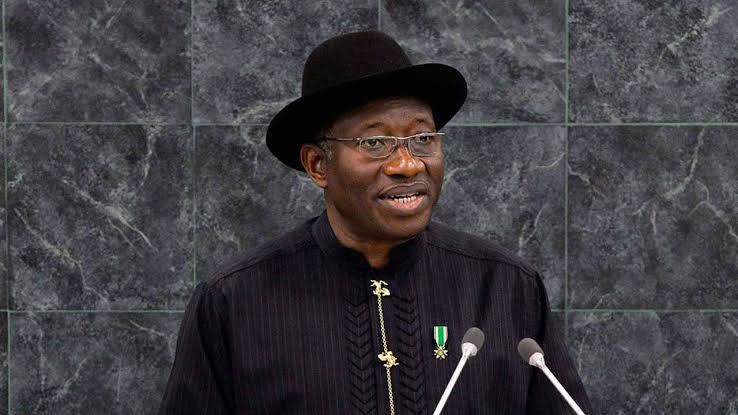
Former President Goodluck Jonathan has urged Nigerian politicians to put the country's interests ahead of party allegiance and sectional loyalties as the 2027 general elections approach. Speaking in Abuja on Tuesday at the fifth national conference of the Forum of Former Deputy Governors of Nigeria, he said no political party or individual should be treated as more important than the nation itself, according to Vanguard News.
Jonathan, who was represented at the event by Bala Ngilari, a former deputy governor of Adamawa State, named the ruling All Progressives Congress, the Nigerian Democratic Congress and the Action Democratic Congress among the parties he said Nigeria is greater than. The two-day conference, running from October 20 to 21, is themed "Rethinking Nation-Building: Bridging the Leadership-Citizen Disconnect Through Orientation, Attitude, Character, Culture and Tradition Towards Sustainable Development."
Why it matters
The remarks land roughly a year before campaigns for the 2027 presidential and general elections are expected to intensify. Coming from a former president who has held office at state and federal level, the call for restraint carries weight in a political climate where party rivalry and ethnic appeals often dominate public debate.
Jonathan argued that politics can only be practised in a peaceful country, and that ethnic, religious and regional divisions remain among the biggest barriers to Nigeria's political development. Vanguard News reports that he called for politics built on competence, integrity, inclusion and national interest.
A reminder that power is temporary
Drawing on his own career, Jonathan noted that he served as deputy governor and governor of Bayelsa State before becoming vice-president and later president. He said the deputy governor's office teaches patience, loyalty, consultation and teamwork, and that governance depends on strong institutions rather than on one person.
He reminded former office holders that political positions are held for a limited time but their consequences can last for generations. He asked former deputy governors to use their experience to support national development, encourage healthy working relationships between serving governors and their deputies, and mentor younger politicians while pushing back against divisive politics.
Jonathan also expressed confidence in Nigeria's future, pointing to the resilience and creativity of its people, especially young citizens, whom he said need room to find work, innovate and prosper. Punch Newspapers reported that he urged politicians to place Nigeria above party loyalty and personal interests.
Forum chair warns on leadership and trust
The forum's national chairman, Chris Alozie Akomas, used his own address to challenge political leaders to drop arrogance and accept accountability. He said power without character is destructive and governance without empathy is hollow, describing leadership as a higher standard of accountability rather than a badge of immunity.
Akomas said the gap between leaders and the people they govern has widened across government institutions, communities and families, weakening the shared effort needed to build a prosperous country. He argued that policies, budgets and administrative reforms cannot deliver sustainable development on their own without a change in the attitudes, values and conduct of those in public office.
He also said public trust will remain out of reach if leaders keep ignoring the daily struggles of ordinary Nigerians, and that citizens share responsibility for national renewal alongside government. "A nation is never rescued by its government alone; it is also sustained by the conscience of its people," he said, according to Vanguard News.
Ganduje on identity and continuity
Also at the conference, former Kano State Governor Abdullahi Ganduje called on Nigerians to embrace the country's diversity and build a stronger sense of national identity. He warned that ethnic politics continues to weaken nation-building, traced Nigeria's integration difficulties to its colonial history, and acknowledged the role of First Republic politicians in the independence struggle.
Ganduje, the immediate past national chairman of the APC, also criticised the lack of continuity between successive administrations, pointing to political friction between governments. LEADERSHIP Newspapers reported that he referred to Okowa as a former vice-presidential candidate of a defunct party.
The conference continues on Wednesday, with attention likely to stay on whether its calls for accountability and national unity translate into conduct on the campaign trail ahead of 2027.